Pull-Up
The pull-up is the benchmark vertical-pulling exercise for building a strong back and biceps using just your bodyweight. Here's how to perform it well — and how to build up to your first rep.





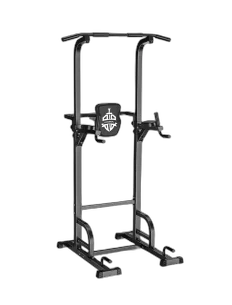
How to do the Pull-Up
- 1 Grip the bar with an overhand grip, hands slightly wider than shoulder-width.
- 2 Hang with arms extended and shoulders engaged (not shrugged up to your ears). Brace your core.
- 3 Initiate the pull by drawing your shoulder blades down, then drive your elbows down toward your ribs.
- 4 Lead with your chest and pull until your chin clears the bar.
- 5 Squeeze your back at the top, then lower under control all the way to a full hang. Repeat.
Tips for better form
- ✓ Start the pull by depressing your shoulder blades, not by bending the elbows first.
- ✓ Think about pulling your chest to the bar, not just getting your chin over it.
- ✓ Use a full range of motion: dead hang at the bottom, chin over the bar at the top.
- ✓ Keep your core braced to avoid swinging.
Common mistakes
- ✕ Swinging or kipping to generate momentum (unless you're training kipping on purpose).
- ✕ Using a partial range of motion — not fully extending at the bottom or not clearing the bar at the top.
- ✕ Shrugging the shoulders up instead of pulling them down and back.
- ✕ Adding weight before you can control your bodyweight reps.
Can't do a pull-up yet? Start here
Build the strength and pattern with these scalable alternatives.
Assisted Pull-Up
Use a band or assisted machine to reduce load while keeping the full movement pattern.
Lat Pulldown
A cable alternative that trains the same vertical-pull pattern with adjustable load.
Inverted Row
A horizontal-pull progression that builds back strength at an easier angle.
Negative Pull-Up
Jump to the top and lower slowly to build pulling strength.
Pull-up questions
What muscles do pull-ups work?
Primarily the lats and upper back, with the biceps, rear delts, and forearms assisting. The core stabilizes the body.
How do I get my first pull-up?
Build strength with assisted pull-ups, lat pulldowns, inverted rows, and slow negatives. Train the pattern 2–3 times per week and progress gradually.
Pull-up vs chin-up — what's the difference?
A pull-up uses an overhand grip and emphasizes the lats and upper back; a chin-up uses an underhand grip and involves the biceps more.
How many reps should I do?
Work in the range you can control with good form — often 3–4 sets of 4–10 reps, adding reps or load over time.
Add the pull-up to your back day
Get the pull-up with an HD video demo, drop it into an AI-generated or custom workout, and track your progress in Fitonist — free to start.