Barbell Bench Press
The barbell bench press is the classic compound pressing movement for building chest, triceps, and front-delt strength. Here's how to perform it with safe, effective form.
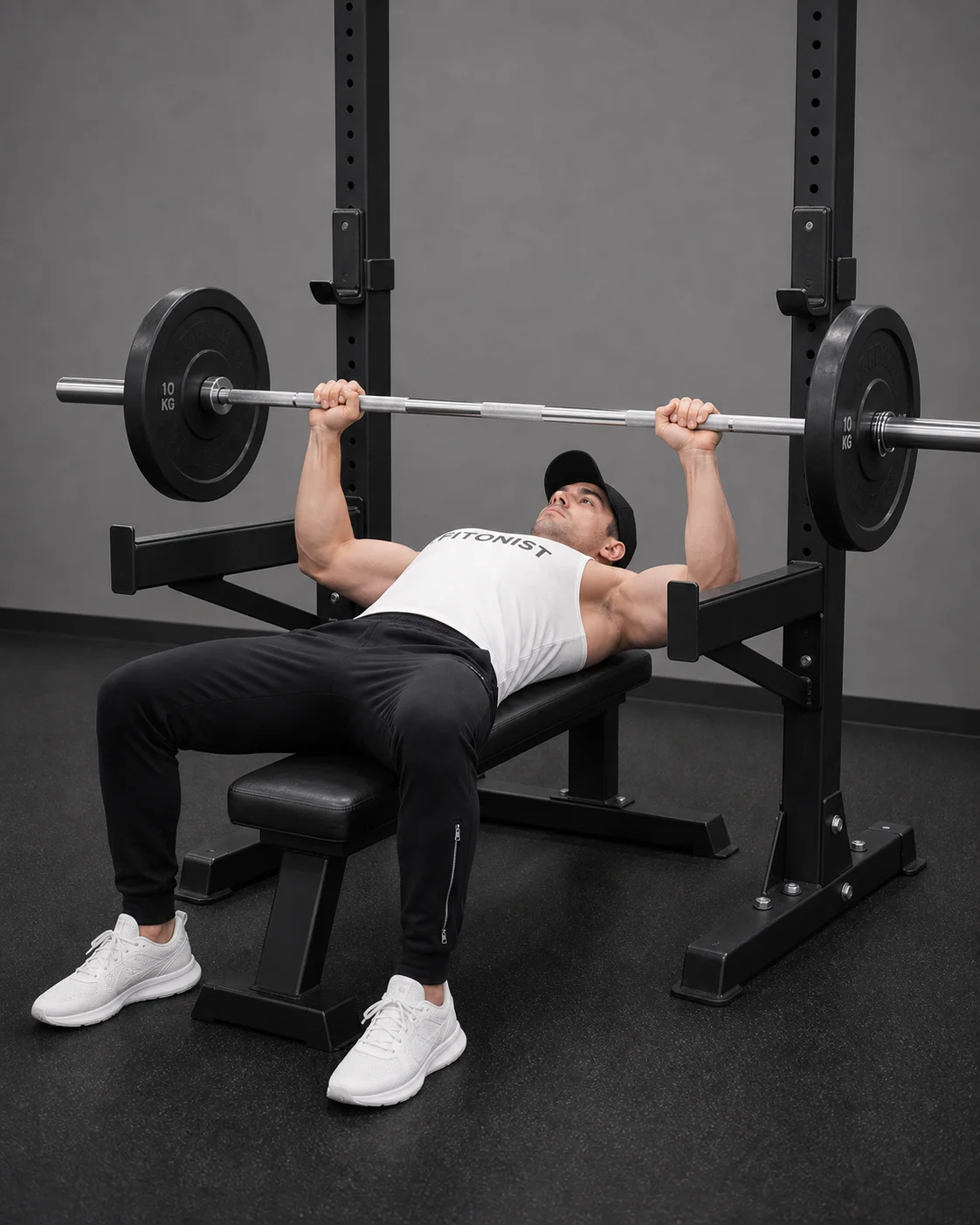



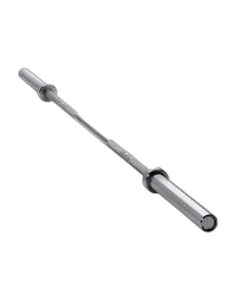
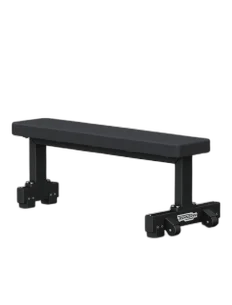
How to do the Barbell Bench Press
- 1 Lie flat on the bench with your eyes roughly under the bar. Plant your feet flat on the floor and set a slight natural arch in your lower back.
- 2 Grip the bar slightly wider than shoulder-width with a full grip (thumbs wrapped). Pull your shoulder blades back and down into the bench.
- 3 Unrack the bar and hold it over your chest with arms extended and wrists stacked over your elbows.
- 4 Lower the bar under control to your mid-chest, keeping your elbows at roughly 45–75° from your torso.
- 5 Touch your chest lightly without bouncing, then press the bar up and slightly back over your shoulders to lockout.
- 6 Repeat for reps, then re-rack the bar carefully. Use a spotter or safety arms for heavy sets.
Tips for better form
- ✓ Keep your shoulder blades retracted and your upper back tight throughout the set.
- ✓ Drive your feet into the floor for stability — leg drive helps you stay tight.
- ✓ Lower the bar to the same point each rep and press in a slight arc back over the shoulders.
- ✓ Keep your wrists stacked over your elbows, not bent back.
Common mistakes
- ✕ Flaring your elbows straight out to 90°, which puts extra stress on the shoulders.
- ✕ Bouncing the bar off your chest instead of controlling the descent.
- ✕ Lifting your hips off the bench to heave the weight up.
- ✕ Using a grip that's far too wide or too narrow for your build.
Alternatives & variations
Swap or progress the movement based on your equipment and goals.
Dumbbell Bench Press
More range of motion and independent-arm stability; easier on the shoulders for some lifters.
Incline Barbell Press
Shifts emphasis toward the upper chest and front delts.
Push-Up
A bodyweight alternative you can scale up or down anywhere.
Machine Chest Press
A guided-path option that's beginner-friendly and easy to control.
Barbell bench press questions
What muscles does the barbell bench press work?
Primarily the chest (pectoralis major), with the triceps and front deltoids assisting. Your upper back and core work to stabilize the lift.
Is the bench press good for beginners?
Yes, once you learn the setup. Start light, focus on a controlled descent and stable shoulder blades, and use a spotter or safety arms as you add weight.
How many sets and reps should I do?
A common range is 3–5 sets of 5–10 reps, adjusted to your goal (lower reps with heavier load for strength, moderate reps for hypertrophy).
Barbell or dumbbell bench press — which is better?
Both are effective. The barbell lets you load more weight and is easy to track; dumbbells offer a longer range of motion and more stability demand per arm.
Add the bench press to your next workout
Get the bench press with an HD video demo, add it to an AI-generated or custom workout, and track your sets, reps, and PRs in Fitonist — free to start.