Progressive Overload Workout Tracker
Fitonist helps you track progressive overload by logging sets and reps, monitoring personal records, reviewing weekly volume per muscle, and connecting each workout to long-term performance trends.
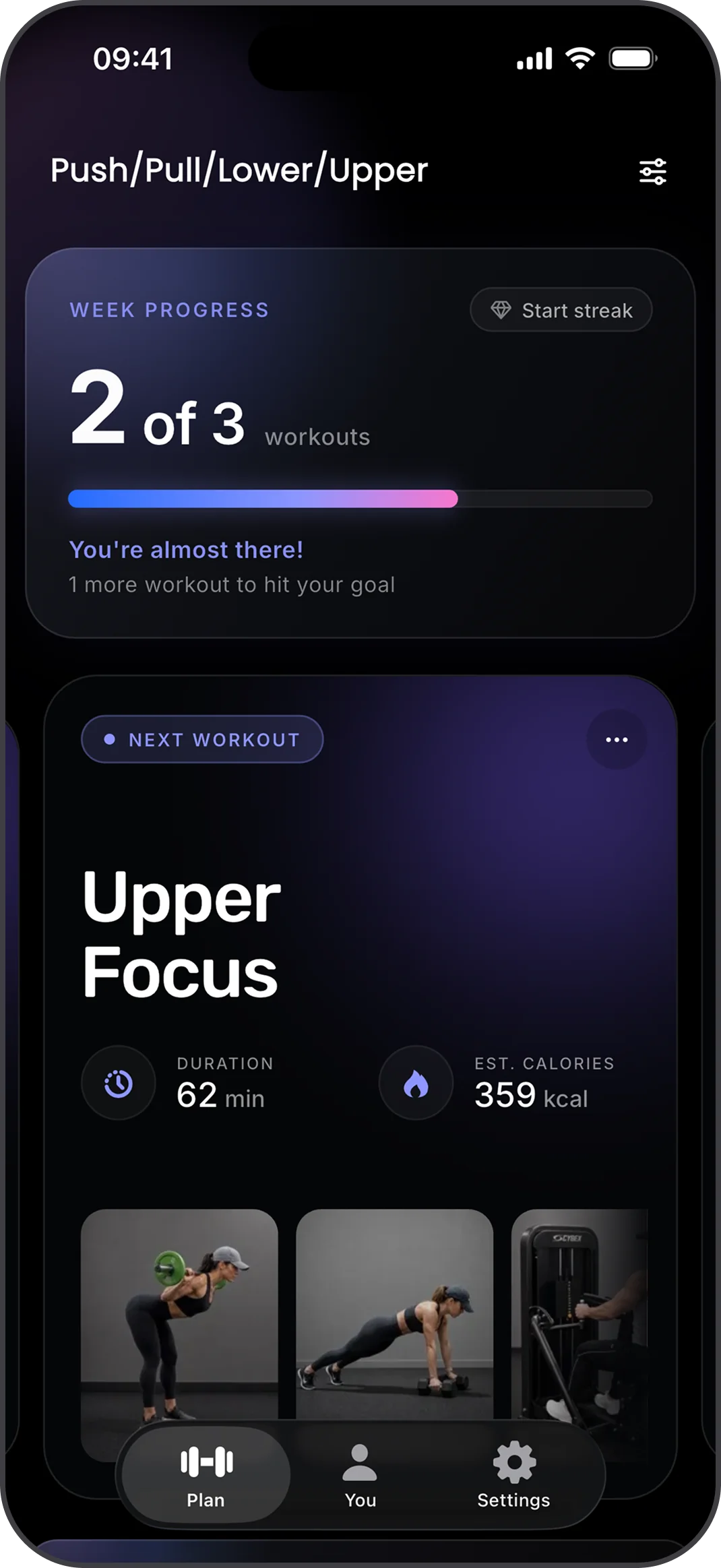
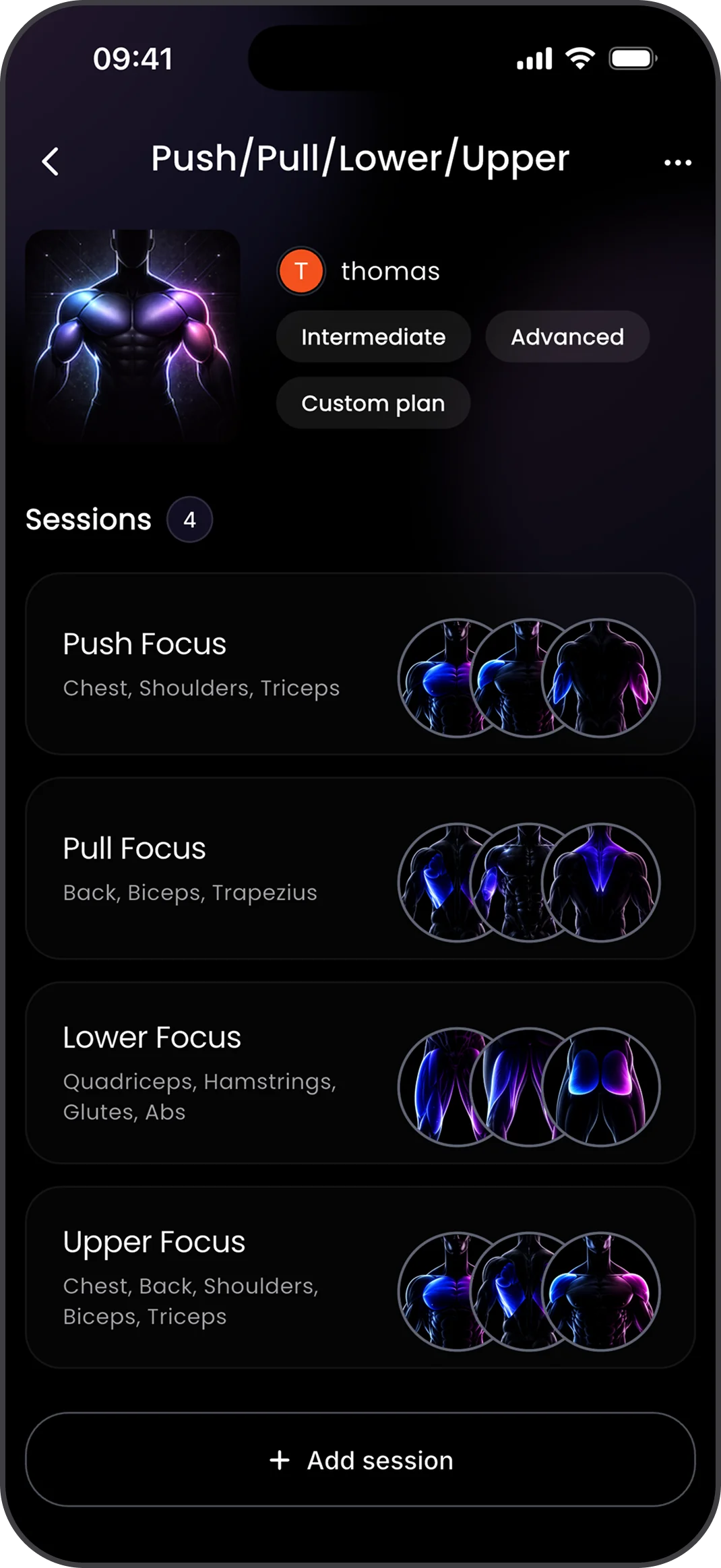
“"Progressive overload is the cornerstone of strength progression. If you aren't tracking your weights, reps, and sets to make micro-adjustments weekly, you are leaving your results to chance."
— Fitonist Strength & Conditioning Specialists
Progressive overload is more than adding weight
Adding weight matters, but overload can also come from better reps, more total work, higher consistency, and smarter recovery. Fitonist gives you more than one signal.
Sets and reps
Log the work you actually did.
- ✓Weights
- ✓Reps
- ✓Workout completion
Personal records
See when performance improves on specific exercises.
- ✓Weight PRs
- ✓Rep PRs
- ✓Exercise history
Weekly volume
Understand muscle-group workload.
- ✓Chest, back, legs, arms
- ✓Training balance
- ✓Recovery context
Consistency
Progress depends on repeatable training.
- ✓Workout streaks
- ✓Weekly goals
- ✓Completion trends
Who should track overload in Fitonist?
| User | Tracking value |
|---|---|
| Beginners | Learn which lifts are improving and build consistent logging habits. |
| Intermediate lifters | Use PRs and volume to keep progress moving without random workouts. |
| Advanced lifters | Monitor volume, balance, and completion while adjusting training variables. |
| Apple Watch users | Log sets from the wrist and review analytics later. |
Progressive overload questions
What is progressive overload?
Progressive overload means gradually increasing training demand over time, such as more weight, reps, sets, quality, or consistency.
Can Fitonist track progressive overload?
Yes. Fitonist tracks sets, reps, personal records, weekly volume, and performance trends.
Does Fitonist track personal records?
Yes. Fitonist tracks personal records by exercise for weight and reps.
Why track weekly volume?
Weekly volume helps show how much work each muscle group is receiving, which can guide training balance and recovery.
Can I use Fitonist on Apple Watch?
Yes. Fitonist supports Apple Watch workout logging for sets and reps.